
-
By:
- collin
- No comment
a practical guide to racism
Racism manifests in diverse forms‚ from overt prejudice to subtle biases‚ deeply rooted in historical contexts and impacting individuals profoundly.
Understanding these nuances is crucial for fostering a more equitable and just society‚ acknowledging the systemic nature of discrimination.
Defining Racism: A Foundational Understanding
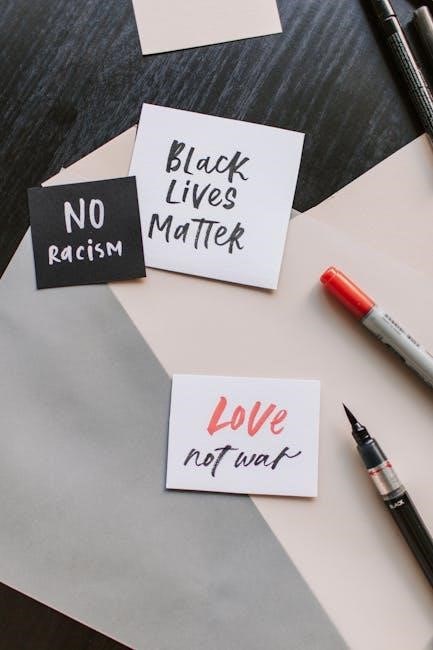
Racism is far more than individual prejudice; it’s a complex system of power‚ privilege‚ and oppression built on racial categorization. It involves not just discriminatory beliefs‚ actions‚ and attitudes‚ but also the structural and institutional mechanisms that perpetuate racial inequality. A foundational understanding requires recognizing that racism isn’t simply about intentional malice‚ but can operate unconsciously through implicit biases and systemic practices.
Essentially‚ racism is prejudice plus power. While anyone can hold prejudiced views‚ racism specifically refers to the dominance of one racial group over others‚ enabling the systematic disadvantage of marginalized communities. This manifests in unequal access to opportunities‚ resources‚ and justice. It’s crucial to differentiate between prejudice – a preconceived judgment – and racism‚ which is the enactment of that prejudice within a power structure.
Furthermore‚ defining racism necessitates acknowledging its evolving nature. Forms shift from overt expressions like slurs and hate crimes to more covert manifestations like microaggressions and institutional policies. Recognizing this complexity is the first step towards dismantling it.
The Historical Roots of Racism
Racism isn’t a recent phenomenon; its origins are deeply embedded in historical power dynamics‚ colonialism‚ and the transatlantic slave trade. The concept of race itself is a social construct‚ developed to justify exploitation and maintain hierarchies. Initially‚ it served to rationalize the enslavement of Africans‚ portraying them as inherently inferior to Europeans.
Colonialism further solidified racial ideologies‚ as European powers imposed their dominance over vast territories and populations. These ideologies were used to legitimize land seizure‚ resource extraction‚ and political control‚ creating lasting systems of inequality. The notion of a “civilized” versus “uncivilized” world was intrinsically linked to racial categorization.
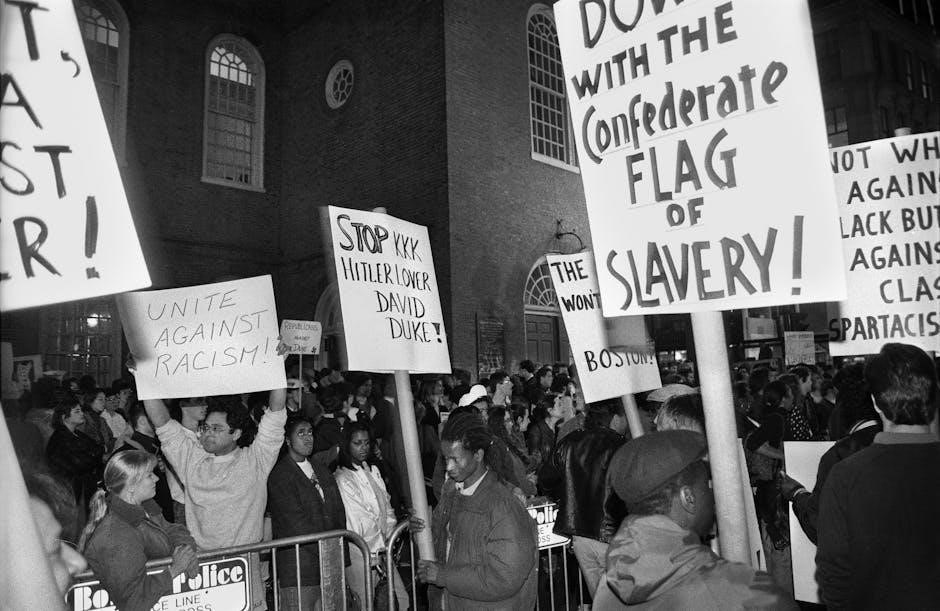
Even after the formal abolition of slavery and colonialism‚ these historical legacies continued to shape social structures and attitudes. Jim Crow laws in the United States‚ apartheid in South Africa‚ and various forms of discriminatory immigration policies are direct consequences of this historical trajectory. Understanding this past is vital for addressing present-day racial disparities.
Forms of Racism
Racism appears in overt‚ covert‚ and institutional forms‚ including antigypsyism‚ antisemitism‚ Islamophobia‚ anti-Black‚ and anti-Asian biases‚ often intersecting and compounding disadvantage.
Overt Racism: Explicit Prejudice and Discrimination
Overt racism represents the most readily identifiable form of prejudice‚ characterized by explicit discriminatory beliefs and behaviors. This encompasses the open expression of negative attitudes‚ stereotypes‚ and biases towards individuals or groups based on their race or ethnicity.
Historically‚ overt racism manifested in legal segregation‚ slavery‚ and systemic denial of rights. Today‚ it appears as hate speech‚ racial slurs‚ discriminatory practices in employment or housing‚ and acts of violence motivated by racial animus – hate crimes being a stark example.
While perhaps less prevalent than more subtle forms‚ overt racism remains a significant problem. It’s often fueled by ignorance‚ fear‚ and deeply ingrained societal biases. Recognizing and confronting overt racism requires direct intervention‚ challenging prejudiced statements‚ and supporting policies that promote equality and justice. It’s crucial to understand that even seemingly isolated incidents contribute to a climate of hostility and reinforce systemic inequalities. Reporting hate crimes and advocating for stronger legal protections are vital steps in combating this damaging form of discrimination.
Covert Racism: Subtle and Implicit Bias
Covert racism operates beneath the surface‚ manifesting as subtle‚ often unconscious biases and discriminatory behaviors. Unlike overt racism’s explicit prejudice‚ this form is characterized by implicit attitudes and stereotypes that individuals may not even be aware they hold.
These biases can influence perceptions‚ judgments‚ and actions in ways that disadvantage racialized groups. Examples include microaggressions – subtle‚ often unintentional expressions of prejudice – and unconscious assumptions about competence or intelligence based on race. Covert racism can also appear as seemingly neutral policies or practices that disproportionately harm certain racial groups.
Addressing covert racism requires self-reflection‚ acknowledging personal biases‚ and actively challenging ingrained stereotypes. Implicit bias training can be a valuable tool‚ but sustained effort and a commitment to equitable practices are essential. Recognizing that good intentions do not negate harmful impacts is crucial. Creating inclusive environments and promoting diverse representation are also vital steps in dismantling this insidious form of discrimination‚ fostering a more just and equitable society for all.
Institutional Racism: Systemic Disadvantage
Institutional racism describes racial discrimination embedded within the structures and systems of society. It’s not necessarily the result of individual prejudice‚ but rather the policies‚ practices‚ and norms that systematically disadvantage racialized groups. This can manifest across various sectors‚ including education‚ employment‚ housing‚ healthcare‚ and the criminal justice system.
These systems‚ often built on historical inequalities‚ perpetuate disparities in access to opportunities and resources. Examples include discriminatory lending practices‚ biased school funding formulas‚ and racial profiling by law enforcement. The consequences are far-reaching‚ contributing to wealth gaps‚ limited social mobility‚ and poorer health outcomes for marginalized communities.
Addressing institutional racism requires systemic change – dismantling discriminatory policies‚ reforming institutions‚ and promoting equitable practices. This necessitates a critical examination of power structures and a commitment to dismantling the barriers that perpetuate racial inequality. It demands proactive measures to ensure equal access and opportunity for all‚ fostering a truly just and equitable society‚ and acknowledging the historical context of these systems.
Intersectional Racism: Overlapping Systems of Oppression
Intersectional racism recognizes that racism doesn’t operate in isolation. It intersects with other forms of oppression – such as sexism‚ classism‚ ableism‚ and homophobia – creating unique experiences of discrimination for individuals holding multiple marginalized identities. A Black woman‚ for example‚ faces challenges distinct from those experienced by a white woman or a Black man‚ due to the combined effects of racism and sexism.
This framework highlights how these intersecting systems of power create compounded disadvantages. Ignoring intersectionality leads to incomplete understandings of inequality and ineffective solutions. It’s crucial to acknowledge that experiences of racism are not monolithic; they are shaped by the interplay of various social categories.
Addressing intersectional racism requires a nuanced approach that considers the complexities of lived experiences. Solutions must be tailored to address the specific challenges faced by individuals at the intersection of multiple forms of oppression‚ promoting inclusivity and equity for all. Recognizing these overlapping systems is vital for genuine social justice.
Antigypsyism (Anti-Roma Racism)
Antigypsyism‚ or anti-Roma racism‚ represents a specific and deeply entrenched form of prejudice directed towards Roma people. It’s a historical phenomenon spanning centuries‚ characterized by stereotypes‚ discrimination‚ and persecution. This racism isn’t simply prejudice; it’s a complex system of oppression rooted in false narratives and societal biases.

Historically‚ Roma communities have faced forced assimilation‚ enslavement‚ and even genocide. Contemporary antigypsyism manifests in various ways‚ including social exclusion‚ discrimination in housing and employment‚ and harmful stereotypes perpetuated in media and public discourse. These biases often lead to systemic disadvantages and limited opportunities for Roma individuals.
Combating antigypsyism requires challenging deeply ingrained prejudices and promoting accurate representations of Roma culture and history. It necessitates advocating for equal rights‚ inclusive policies‚ and actively dismantling the systemic barriers that perpetuate discrimination. Recognizing and addressing this specific form of racism is crucial for achieving true equality.
Antisemitism: Historical and Contemporary Forms
Antisemitism‚ hostility to or prejudice against Jews‚ possesses a long and devastating history‚ evolving through distinct yet interconnected phases. From religious discrimination in medieval Europe to modern political ideologies‚ it has consistently manifested as a potent force of hatred. The Holocaust represents the most horrific culmination of antisemitism‚ a systematic genocide claiming millions of Jewish lives.
Contemporary antisemitism takes various forms‚ including denial or distortion of the Holocaust‚ conspiracy theories targeting Jewish individuals or institutions‚ and demonization of Israel. It often intersects with other forms of prejudice‚ finding expression online and in political discourse. This modern iteration frequently disguises itself as criticism of Israeli policies‚ crossing the line into harmful stereotypes.
Combating antisemitism requires vigilance‚ education‚ and a firm commitment to challenging all forms of hate speech and discrimination. It demands recognizing the historical roots of this prejudice and actively countering its contemporary manifestations‚ fostering understanding and respect.
Islamophobia: Discrimination Against Muslims
Islamophobia‚ the fear or prejudice against Islam and Muslims‚ has surged in recent decades‚ fueled by political rhetoric‚ media representations‚ and global events. It manifests as discrimination in various spheres of life‚ including employment‚ education‚ and housing‚ often stemming from misconceptions about the faith and its adherents.
This prejudice frequently relies on harmful stereotypes portraying Muslims as inherently violent‚ extremist‚ or incompatible with Western values. Such generalizations ignore the diversity within the Muslim community and contribute to social exclusion and marginalization. Post-9/11‚ heightened security measures and surveillance have disproportionately targeted Muslim communities‚ exacerbating feelings of suspicion and distrust.
Addressing Islamophobia requires challenging biased narratives‚ promoting interfaith dialogue‚ and advocating for policies that protect the rights and freedoms of Muslims. Education plays a vital role in dismantling stereotypes and fostering understanding‚ alongside actively confronting discriminatory practices and hate crimes.
Anti-Black Racism: A Specific and Pervasive Form
Anti-Black racism is a distinct and deeply entrenched form of prejudice with a long and brutal history‚ originating in the transatlantic slave trade and persisting through systemic discrimination. It’s not merely individual prejudice‚ but a pervasive power dynamic woven into societal structures‚ impacting Black individuals across all aspects of life.
This racism manifests in numerous ways‚ including racial profiling‚ disproportionate incarceration rates‚ limited access to opportunities‚ and microaggressions. Historical trauma continues to affect Black communities‚ contributing to health disparities and socioeconomic inequalities. Colorism‚ discrimination based on skin tone within the Black community‚ further complicates the issue.
Combating anti-Black racism demands acknowledging its unique historical context‚ dismantling systemic barriers‚ and actively challenging implicit biases. It requires centering Black voices‚ supporting Black-led organizations‚ and advocating for policies that promote racial justice and equity. True allyship involves consistent action and a commitment to dismantling white supremacy.
Anti-Asian Racism: Increasing Visibility and Challenges
Anti-Asian racism‚ while historically present‚ has seen a troubling surge in visibility in recent years‚ fueled by harmful stereotypes and scapegoating‚ particularly during the COVID-19 pandemic. This racism often manifests as xenophobia‚ discrimination‚ and violence targeting individuals of Asian descent.
The “perpetual foreigner” stereotype contributes to the marginalization of Asian Americans‚ regardless of their citizenship or generational status. This leads to experiences of being seen as outsiders‚ facing microaggressions‚ and encountering barriers to full inclusion. The model minority myth‚ while seemingly positive‚ can also be damaging‚ pitting Asian Americans against other marginalized groups and masking the diversity of experiences within the community.
Addressing anti-Asian racism requires challenging stereotypes‚ amplifying Asian American voices‚ and advocating for policies that protect against hate crimes and discrimination. It’s crucial to recognize the intersectionality of this racism with other forms of oppression and to build solidarity across communities.

The Impact of Racism
Racism profoundly affects mental and physical well-being‚ creating socioeconomic disparities and health inequities. Systemic disadvantages limit opportunities and perpetuate cycles of disadvantage.

Psychological Effects of Racism
Racism’s psychological toll is substantial‚ extending far beyond immediate incidents of discrimination. Constant vigilance against bias‚ often termed “racial battle fatigue‚” creates chronic stress and emotional exhaustion. Individuals may internalize negative stereotypes‚ leading to diminished self-worth and feelings of helplessness.
Experiences of discrimination can trigger anxiety‚ depression‚ and post-traumatic stress disorder (PTSD). Microaggressions‚ subtle yet pervasive acts of bias‚ accumulate over time‚ eroding mental health. These seemingly minor offenses communicate hostility and invalidate experiences‚ contributing to feelings of isolation and alienation.
Furthermore‚ racism impacts identity development‚ particularly for young people navigating their place in society. The pressure to conform to dominant cultural norms or grapple with conflicting identities can be deeply unsettling. Addressing these psychological effects requires culturally sensitive mental health support and a commitment to dismantling systemic barriers that perpetuate racial trauma. Recognizing and validating these experiences is a crucial first step towards healing and resilience.
Socioeconomic Consequences of Racism
Racism generates significant and lasting socioeconomic disparities. Historically‚ discriminatory practices like redlining and segregation limited access to quality education‚ housing‚ and employment opportunities for marginalized groups. These disadvantages compound over generations‚ creating cycles of poverty and hindering wealth accumulation.
Racial bias in hiring and promotion processes continues to limit career advancement‚ resulting in wage gaps and underrepresentation in leadership positions. Discriminatory lending practices further exacerbate wealth inequality‚ making it harder for people of color to secure loans for homes or businesses. These systemic barriers restrict economic mobility and perpetuate disadvantage.
The cumulative effect of these inequalities manifests in higher rates of poverty‚ food insecurity‚ and limited access to healthcare within marginalized communities. Addressing these consequences requires targeted investments in education‚ job training‚ affordable housing‚ and equitable economic policies. Dismantling systemic barriers and promoting inclusive economic growth are essential for creating a more just and prosperous society for all.
Health Disparities Linked to Racism
Racism profoundly impacts health outcomes‚ creating significant disparities across racial and ethnic groups. Chronic stress stemming from experiences of discrimination weakens the immune system and increases vulnerability to various illnesses. Limited access to quality healthcare‚ often rooted in socioeconomic inequalities perpetuated by racism‚ further exacerbates these health risks.
Historical and ongoing trauma associated with racism contributes to higher rates of mental health conditions‚ including depression‚ anxiety‚ and PTSD‚ within marginalized communities. Environmental racism‚ where communities of color are disproportionately exposed to pollutants and environmental hazards‚ leads to increased rates of respiratory illnesses and other health problems.
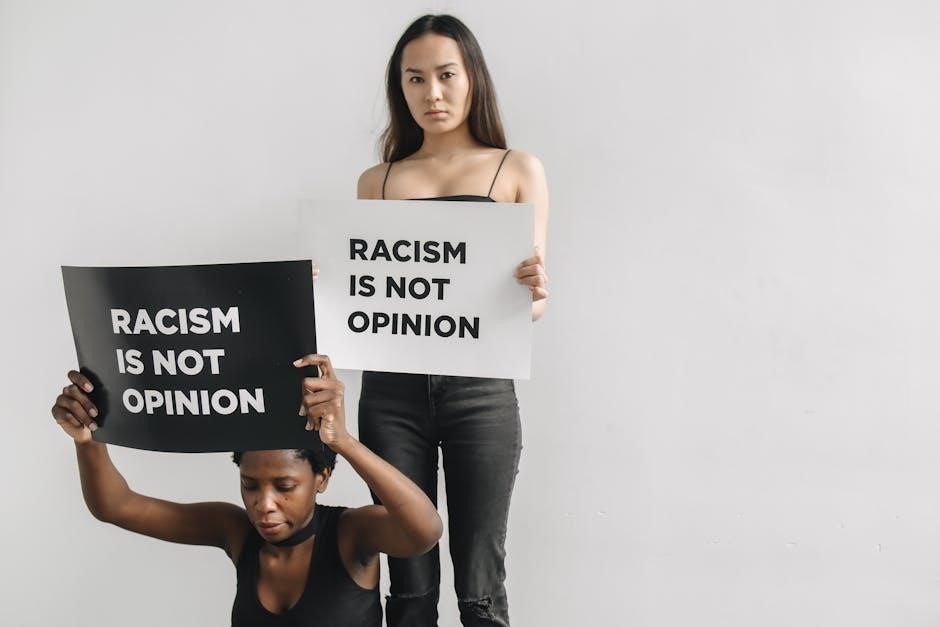
Addressing these disparities requires a multi-faceted approach‚ including culturally competent healthcare‚ increased access to mental health services‚ and policies that address environmental injustices. Recognizing the impact of social determinants of health – factors like poverty‚ housing‚ and education – is crucial for achieving health equity and dismantling the systemic barriers that contribute to racial health disparities.

Addressing and Combating Racism
Combating racism demands proactive engagement: challenging biases‚ promoting inclusive education‚ and advocating for systemic changes to dismantle discriminatory structures and foster equity.
Recognizing and Challenging Personal Biases
Acknowledging personal biases is the foundational step in anti-racist work. Everyone holds unconscious beliefs shaped by societal influences and personal experiences; these can manifest as implicit biases impacting perceptions and actions.
Self-reflection is key. Regularly examine your thoughts‚ reactions‚ and assumptions‚ particularly when interacting with individuals from different racial backgrounds. Ask yourself: Why did I react that way? What assumptions am I making?
Utilize tools like Harvard’s Implicit Association Tests (IATs) to uncover hidden biases. While not definitive‚ they offer valuable insights into unconscious preferences. Be open to discomfort; recognizing bias can be challenging.
Challenge biased thoughts by actively seeking out diverse perspectives. Engage with media created by people of color‚ read books by authors from different backgrounds‚ and listen to their lived experiences.
Practice empathy and perspective-taking. Try to understand situations from another person’s point of view‚ considering the impact of systemic racism on their life. Interrupt biased statements made by others‚ even if uncomfortable‚ and advocate for inclusive language and behavior. Continuous learning and self-awareness are vital for dismantling internal prejudice.
Promoting Anti-Racist Education and Awareness
Anti-racist education is crucial for dismantling systemic inequalities. It moves beyond simply acknowledging racism to actively challenging and dismantling racist structures and beliefs. This begins with comprehensive curricula in schools‚ incorporating diverse histories and perspectives often marginalized.
Support initiatives that promote culturally responsive teaching‚ ensuring educators are equipped to address issues of race and equity effectively. Encourage critical thinking about power dynamics and privilege.
Community workshops and training sessions can raise awareness among adults. These should focus on understanding implicit bias‚ microaggressions‚ and the historical roots of racism. Facilitate open and honest conversations‚ creating safe spaces for dialogue.
Utilize media – documentaries‚ films‚ books‚ and podcasts – to educate yourself and others. Share resources widely through social media and community networks. Amplify the voices of marginalized communities.
Advocate for inclusive policies in workplaces and organizations. Promote diversity and inclusion training‚ and challenge discriminatory practices. Education is an ongoing process‚ requiring continuous learning and commitment to creating a more just and equitable world.
Advocating for Systemic Change
Systemic racism demands systemic solutions. Individual actions are vital‚ but insufficient without addressing the root causes embedded within institutions. Advocate for policy changes at local‚ state‚ and national levels that dismantle discriminatory practices.
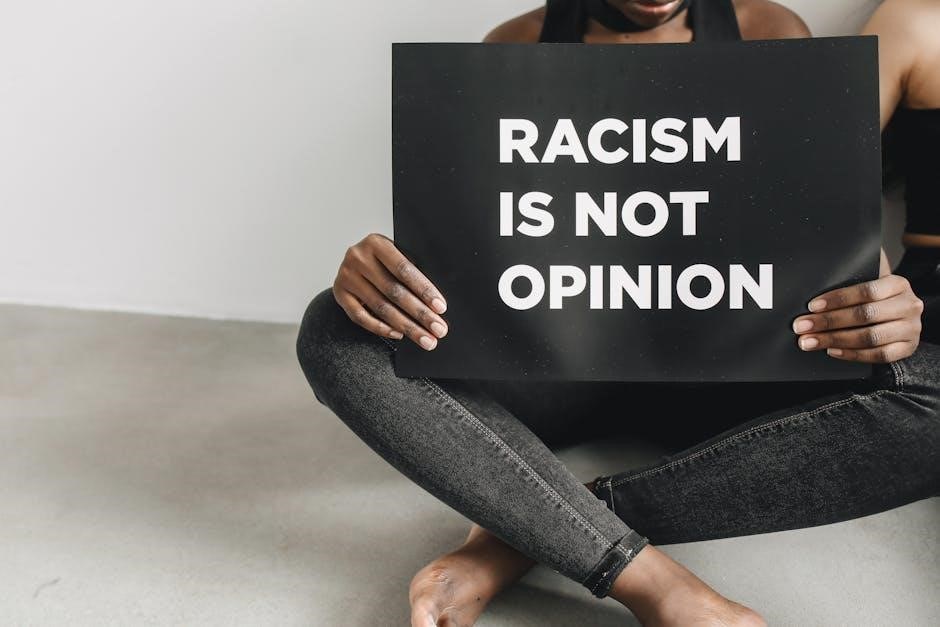
Support legislation addressing racial disparities in areas like criminal justice‚ housing‚ education‚ and healthcare. Demand accountability from elected officials and challenge policies that perpetuate inequality. Participate in peaceful protests and demonstrations to raise awareness and demand change.
Invest in community organizations led by and serving marginalized communities. These groups are often at the forefront of advocating for systemic change. Provide financial support‚ volunteer your time‚ and amplify their voices.
Promote equitable resource allocation. Advocate for funding to be directed towards underserved communities‚ addressing historical disadvantages. Support initiatives that promote economic empowerment and opportunity for all.
Challenge institutional biases within workplaces and organizations. Advocate for diverse hiring practices‚ equitable promotion opportunities‚ and inclusive policies. Systemic change requires sustained effort and a commitment to dismantling oppressive structures.